
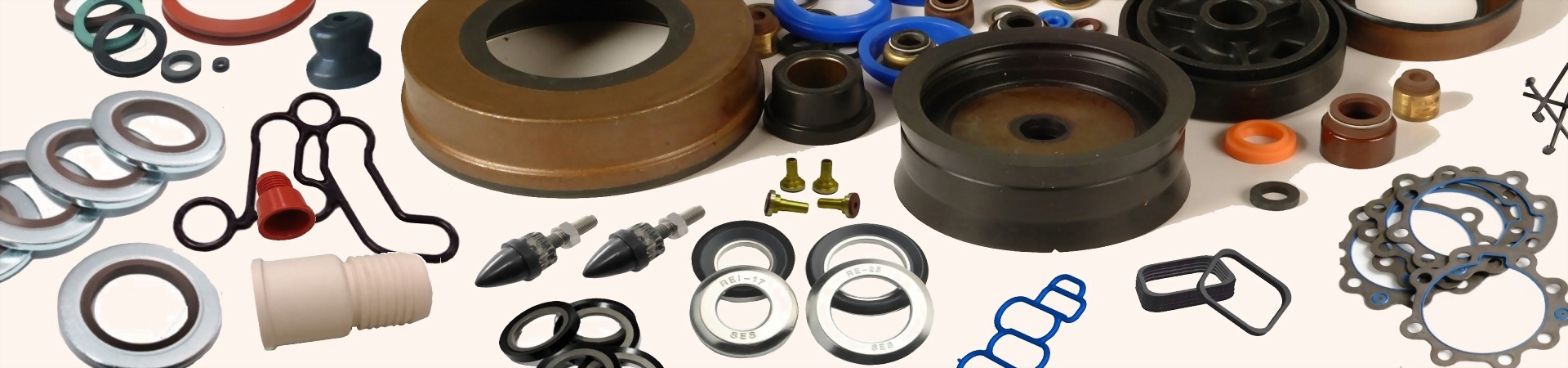
How Gamma Seal Solves Common Bearing Problems
Bearings depend on clean lubrication and a controlled operating environment to perform reliably. In practice, however, rotating equipment is often exposed to dust, moisture, grease loss, vibration, and other conditions that can accelerate wear or shorten maintenance intervals.
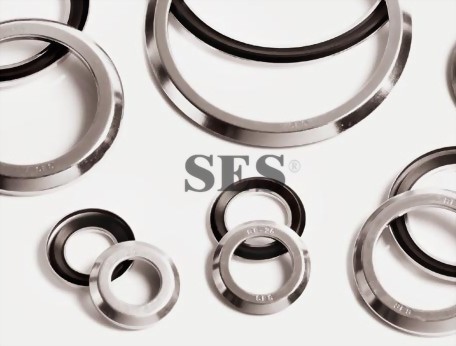
A gamma seal, also known as a gamma ring, is designed to add external protection around rotating shafts and bearing assemblies. By combining an elastomer sealing element—a flexible, rubber-like polymer that deforms to create a tight seal and springs back to retain its shape—with a durable metal case, it can help keep contaminants away from the bearing area while supporting grease retention. This article explains the bearing problems gamma seals are intended to address, how the sealing mechanism works, and what to consider when selecting one for a specific application.
Common Causes of Bearing Failure
Bearing damage usually stems from a combination of factors, with improper lubrication and contamination standing out as the leading causes. Other elements—such as moisture ingress, improper mounting, excessive vibration, heavy loads, and harsh operating conditions—can also significantly shorten a bearing's service life.
Contaminant Ingress
When solid particles like dust, sand, or metal shavings enter a bearing through an exposed shaft opening, they mix directly into the lubricant. Rather than flushing out, these particles circulate continuously through the raceways, acting as an abrasive compound squeezed between the rolling elements and metal tracks.
This continuous grinding creates deep surface indentations, micro-spalling, and scratch channels on critical contact surfaces. As surface smoothness degrades, friction increases—causing sharp spikes in operating temperatures, elevated noise levels, and excessive vibration that accelerates overall mechanical instability.
Equipment working in harsh environments, such as agricultural machinery, heavy construction gear, and industrial conveyors, faces the highest risk of rapid component degradation and unexpected downtime if shaft interfaces remain unprotected.
Water and Moisture Ingress
Water, coolant, washdown fluid, or humidity can also affect bearing performance. When moisture reaches internal bearing surfaces, it may contribute to corrosion or rust. If water mixes with grease or oil, it can also change the lubricant’s properties and reduce its ability to maintain an effective lubricating film.
This makes moisture exclusion an important consideration for equipment used outdoors, in washdown environments, or around coolant and process fluids. The seal does not need to withstand direct fluid pressure in every application, but it should limit the amount of external liquid reaching the protected area.
Insufficient Lubrication or Grease Loss
Bearings rely on a continuous lubricant film to eliminate direct metal-to-metal contact between rolling elements and raceways, preventing friction-induced welding, galling, and rapid surface fatigue. When grease escapes through compromised seals or lubricant levels drop, this protective barrier breaks down, leading to elevated friction, severe abrasive wear, and thermal expansion.
Effective sealing does more than block foreign debris. It acts as a primary containment system to preserve the required lubricant volume. When seals leak and allow grease to bleed out, the resulting lubrication failure drastically shortens component lifespan, forcing premature maintenance and costly, avoidable bearing replacements.
Vibration and Impact Loads
Repeated vibration, shock loading, misalignment, or excessive mechanical loads can contribute to fatigue, surface damage, and other bearing problems. These conditions are mechanical in origin and cannot be corrected by installing a gamma seal.
However, contamination or lubricant loss can add further wear to a bearing that is already operating under demanding loads. For that reason, sealing should be considered together with proper bearing selection, alignment, lubrication, and maintenance rather than as a standalone solution to every bearing problem.
What Is a Gamma Seal?
A gamma seal (or gamma ring) is an axial rotary seal designed to protect bearings and primary shaft seals from external contamination, moisture ingress, and grease loss. Press-fitted directly onto a shaft, the seal rotates with it to provide dynamic protection, making its narrow profile particularly useful in compact machinery where installation space is limited.
The seal combines a durable metal case with a flexible elastomer sealing element. While the elastomer lip creates a tight physical barrier to retain lubricant, the metal case acts as a structural frame and deflector that slings debris and liquid splashes away from the shaft area during rotation.
Unlike radial oil seals that press against the outer surface of a rotating shaft, a gamma ring seals axially against a stationary face perpendicular to the shaft. Rather than acting as a high-pressure fluid seal, it functions as a low-friction primary defense to preserve bearing lifespan in demanding environments.
How Does a Gamma Seal Work?
The sealing action is created by axial contact between the elastomer lip and a stationary counterface. When the gamma seal is pressed onto the shaft, the metal case and sealing member rotate together with the shaft while the flexible lip remains in sliding contact with the stationary surface.
The contact pressure is designed to create a barrier against external contamination while avoiding unnecessary friction. During rotation, the metal case also acts as a deflector, helping direct dirt, splash, and debris away from the sealing interface. Centrifugal action further contributes to this exclusion effect.
An interesting characteristic of the design is that lip contact pressure tends to decrease as rotational speed increases because of centrifugal force. As a result, friction can also decrease at higher shaft speeds. Actual behavior still depends on seal diameter, elastomer material, installation accuracy, counterface geometry, and operating speed, so these variables should be reviewed together during selection.
Installation is equally important. The seal should be pressed onto the shaft evenly and positioned accurately rather than driven directly with a hammer. The sealing member also requires appropriate lubrication during assembly. Improper installation can affect lip contact and reduce the effectiveness of the sealing arrangement.
How Gamma Seal Helps Address Common Bearing Problems
The main value of a gamma ring is that it helps protect the bearing environment from several external conditions that can contribute to wear. It does not correct load, alignment, or vibration problems, but it can reduce contamination and lubricant loss around the bearing interface.
- Helps reduce solid contaminant ingress: The metal deflector and elastomer sealing lip create an additional barrier between the external environment and the bearing. This can help limit dust, sand, and debris from reaching the lubricant or primary seal. The metal case also provides added protection for the softer elastomer element in harsher environments.
- Helps limit moisture and liquid splash: By directing contaminants away from the sealing interface and maintaining contact with the counterface, a gamma seal can reduce the bearing area’s exposure to rain, spray, coolant, and similar external liquids. It should not be treated as a substitute for a dedicated seal in submerged or pressurized applications.
- Helps retain grease: Gamma seals can help reduce grease loss from the protected area while also excluding external contaminants. This is useful in applications where both lubrication retention and contamination control are important.
- Supports layered sealing systems: A gamma ring can be used together with a conventional radial shaft seal. In this arrangement, the gamma seal acts as the first barrier against dirt and water, while the primary seal handles the main lubricant or fluid-retention function.
- Helps reduce secondary stress from poor environmental conditions: By maintaining a clean, well-lubricated environment, a gamma seal minimizes the accelerated wear and surface degradation caused by contamination and lubricant loss.
Choosing the Right Gamma Seal for Your Application
Gamma seal selection should consider the full operating environment rather than only the nominal shaft diameter. The following factors can help narrow down the appropriate design.
- Shaft Diameter and Installation Space: Because the gamma ring is press-fitted directly onto the rotating shaft, its dimensions must provide the correct interference fit while leaving enough axial space for the sealing lip to contact the counterface. Its relatively narrow installation width can be useful in compact assemblies.
- Rotational Speed: Shaft speed affects sealing behavior because centrifugal force influences lip contact pressure. A seal that performs appropriately at one shaft diameter and speed may not provide the same result under very different operating conditions.
- Seal Material: Material selection should match the expected temperature, lubricant, chemical exposure, and corrosion conditions. Common elastomer options include NBR, FKM, EPDM, HNBR, and silicone, while metal cases may be produced from carbon steel or stainless steel. Each combination offers different temperature, chemical, and corrosion characteristics.
- Operating Environment: Consider the type and direction of contamination, frequency of water or splash exposure, and the overall severity of the operating environment. Gamma seals are commonly used in agricultural equipment, construction machinery, industrial motors, gearboxes, conveyors, automotive components, and other rotating equipment exposed to dirt, moisture, or grease.
- Interaction With Other Seals: In some applications, the gamma seal works together with a primary radial shaft seal rather than replacing it. Buyers should therefore review the complete sealing arrangement, including maintenance intervals and the role each seal performs, before final selection.

Conclusion
A gamma seal can help address several common bearing problems by reducing the ingress of dust and moisture while supporting grease retention around the protected area. Its metal case provides support and deflection, while the elastomer lip creates the axial sealing contact needed for contamination exclusion. It should be selected as part of the overall bearing and sealing arrangement, with shaft size, speed, material, counterface, and operating environment considered together.
At SES, we offer gamma seals in RE/RB and RE1/9RB configurations, with elastomer options including NBR, FKM, EPDM, HNBR, and silicone, and metal options including carbon steel, stainless steel 304, and stainless steel 316. Customers can review available designs and specifications here. For assistance with dimensions, materials, operating conditions, or OEM sealing requirements, contact our team today.